

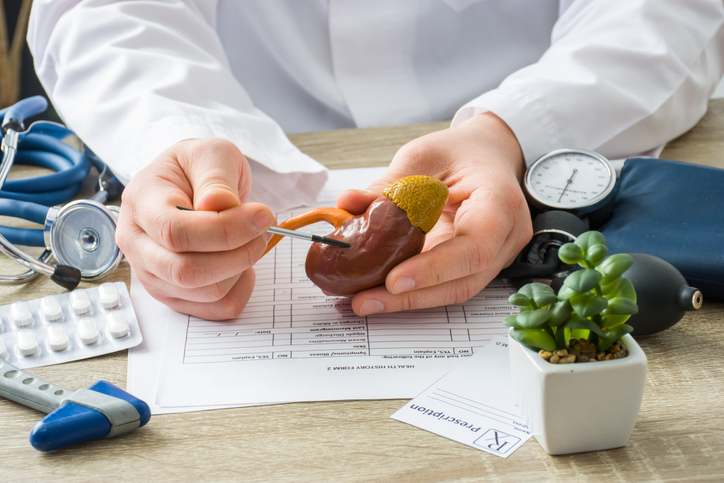
Kidney stones are hard deposits made of minerals and salts that form inside your kidneys. Diet, excess body weight, some medical conditions, and certain supplements and medications are among the many causes of kidney stones. Kidney stones can affect any part of your urinary tract — from your kidneys to your bladder. Often, stones form when the urine becomes concentrated, allowing minerals to crystallize and stick together.
Passing kidney stones can be quite painful, but the stones usually cause no permanent damage if they’re recognized in a timely fashion. Depending on your situation, you may need nothing more than to take pain medication and drink lots of water to pass a kidney stone. In other instances — for example, if stones become lodged in the urinary tract, are associated with a urinary infection, or cause complications — surgery may be needed.
Causes
Kidney stones often have no definite, single cause, although several factors may increase your risk.
Kidney stones form when your urine contains more crystal-forming substances — such as calcium, oxalate, and uric acid — than the fluid in your urine can dilute. At the same time, your urine may lack substances that prevent crystals from sticking together, creating an ideal environment for kidney stones to form.
Types of kidney stones
Knowing the type of kidney stone you have helps determine its cause, and may give clues on how to reduce your risk of getting more kidney stones. Types of kidney stones include:
- Calcium stones. Most kidney stones are calcium stones, usually in the form of calcium oxalate. Oxalate is a substance made daily by your liver or absorbed from your diet. Certain fruits and vegetables, as well as nuts and chocolate, have high oxalate content. Dietary factors, high doses of vitamin D, intestinal bypass surgery, and several metabolic disorders can increase the concentration of calcium or oxalate in urine.
- Struvite stones. Struvite stones form in response to a urinary tract infection. These stones can grow quickly and become quite large, sometimes with few symptoms or little warning.
- Uric acid stones. Uric acid stones can form in people who lose too much fluid because of chronic diarrhea or malabsorption, those who eat a high-protein diet, and those with diabetes or metabolic syndrome. Certain genetic factors also may increase your risk of uric acid stones.
- Cystine stones. These stones form in people with a hereditary disorder called cystinuria that causes the kidneys to excrete too much of a specific amino acid (www.mayoclinic.org).
Symptoms
If you have a very small kidney stone that moves easily through your urinary tract, you may not have any symptoms, and may never know that you had a kidney stone.
If you have a larger kidney stone, you may notice any of the following symptoms:
- Pain while urinating
- Blood in your urine
- Sharp pain in your back or lower abdomen
- Nausea and vomiting
If you are having any of these symptoms, contact your health care provider (www.kidneyfund.org).
Prevention
Drink plenty of water: Drinking extra water dilutes the substances in urine that lead to stones. Strive to drink enough fluids to pass 2 liters of urine a day, which is roughly eight standard 8-ounce cups. It may help to include some citrus beverages, like lemonade and orange juice. The citrate in these beverages helps block stone formation.
Eat calcium-rich foods: Dietary calcium binds to oxalate in your intestines and decreases the amount of oxalate that gets absorbed into the bloodstream and then excreted by the kidney. This lowers the concentration of oxalate in the urine, so there is less chance it can bind to urinary calcium. That leads to a decreased risk of kidney stones.
Reduce sodium: A high-sodium diet can trigger kidney stones because it increases the amount of calcium in your urine. So, a low-sodium diet is recommended. Current guidelines suggest limiting total daily sodium intake to 2,300 mg. If sodium has contributed to kidney stones in the past, try to reduce your daily intake to 1,500 mg. This will also be good for your blood pressure and heart.
Limit animal protein: Eating too much animal protein, such as red meat, poultry, eggs, and seafood, boosts the level of uric acid and could lead to kidney stones. A high-protein diet also reduces levels of urinary citrate, the chemical in urine that helps prevent stones from forming. If you’re prone to stones, limit your daily meat intake to a quantity that is no bigger than a pack of playing cards. This is also a heart-healthy portion.
Avoid stone-forming foods: Beets, chocolate, spinach, rhubarb, tea, and most nuts are rich in oxalate, which can contribute to kidney stones. If you suffer from stones, your doctor may advise you to avoid these foods or to consume them in smaller amounts (www.health.harvard.edu).
Treatment
Treatment for kidney stones varies, depending on the type of stone and the cause.
Small stones with minimal symptoms: Most small kidney stones won’t require invasive treatment. You may be able to pass a small stone by:
- Drinking water. Drinking as much as 2 to 3 quarts (1.8 to 3.6 liters) a day will keep your urine dilute and may prevent stones from forming. Unless your doctor tells you otherwise, drink enough fluid — ideally mostly water — to produce clear or nearly clear urine.
- Pain relievers. Passing a small stone can cause some discomfort. To relieve mild pain, your doctor may recommend pain relievers such as ibuprofen (Advil, Motrin IB, others) or naproxen sodium (Aleve).
- Medical therapy. Your doctor may give you medication to help pass your kidney stone. This type of medication, known as an alpha-blocker, relaxes the muscles in your ureter, helping you pass the kidney stone more quickly and with less pain.
Large stones and those that cause symptoms: Kidney stones that are too large to pass on their own or cause bleeding, kidney damage or ongoing urinary tract infections may require more-extensive treatment. Procedures may include:
- Using sound waves to break up stones. For certain kidney stones — depending on size and location — your doctor may recommend a procedure called extracorporeal shock wave lithotripsy (ESWL).
- Surgery to remove very large stones in the kidney. A procedure called percutaneous nephrolithotomy (nef-row-lih-THOT-uh-me) involves surgically removing a kidney stone using small telescopes and instruments inserted through a small incision in your back.
- Using a scope to remove stones. To remove a smaller stone in your ureter or kidney, your doctor may pass a thin lighted tube (ureteroscope) equipped with a camera through your urethra and bladder to your ureter. Once the stone is located, special tools can snare the stone or break it into pieces that will pass in your urine.
- Parathyroid gland surgery. Some calcium phosphate stones are caused by overactive parathyroid glands, which are located on the four corners of your thyroid gland, just below your Adam’s apple. When these glands produce too much parathyroid hormone (hyperparathyroidism), your calcium levels can become too high and kidney stones may form as a result (www.mayoclinic.org).
Home Remedies for kidney stones
Drink water: Drinking water is one of the easiest ways to treat and prevent kidney stones, as dehydration is one of the main causes. Most health authorities recommend drinking six to eight glasses of water per day to prevent dehydration (www.niddk.nih.gov).
Lemon juice: Lemons contain citrate, a compound that helps break down calcium deposits and slow their growth. A 2019 cross-sectional study found that sugar-free lemon juice was an effective remedy for kidney stones (www.ncbi.nlm.nih.gov).It is important to examine labels carefully when purchasing juice products. Many lemon juice products contain small amounts of pure lemon extract and high amounts of sweeteners, which can actually increase the risk of kidney stones.
Celery Seed: Celery seed is thought to clear away toxins that contribute to kidney stone formation and has long been used in traditional medications. It also helps flush out the body so you can pass the stone (www.ncbi.nlm.nih.gov).
Apple cider vinegar: raw apple cider vinegar contains acetic acid. Acetic acid helps dissolve kidney stones. You can mix this with a few ounces of water to make it more palatable. This will also help break up the stones and can help prevent future kidney stone formation (urologyspecialistsnc.com).
Avoid sugary and caffienated drinks: Carbonated, caffeinated, and alcoholic drinks can all increase a person’s risk of developing kidney stones. Research suggests that drinking caffeine can increase the risk of stones. Drinks and sodas that contain real or artificial sugars can also lead to kidney stones (www.ncbi.nlm.nih.gov). Also, foods high in sugar, salt, and fat are known to increase the risk of kidney deposits and intensify the symptoms.
Supportive Links:
“Kidney stone disease: an update on current concepts.” Advances in urology 2018 (2018).
https://www.hindawi.com/journals/au/2018/3068365/
“Kidney stone disease.” The Journal of clinical investigation 115.10 (2005): 2598-2608.
https://www.jci.org/articles/view/26662
“Study of medicinal plants in Aravali regions of Rajasthan for treatment of kidney stone and urinary tract troubles.” International Journal of PharmTech Research 3.1 (2011): 110-113.
https://synapse.koreamed.org/upload/SynapseData/PDFData/0020kju/kju-55-775.pdf
Note: “Western Pharmaceutical” is defined as a system in which medical doctors and other healthcare professionals (such as nurses, pharmacists, and therapists) treat symptoms and diseases using drugs, radiation, or surgery. Quote from National Cancer Institute: http://www.cancer.gov



0 Comments