


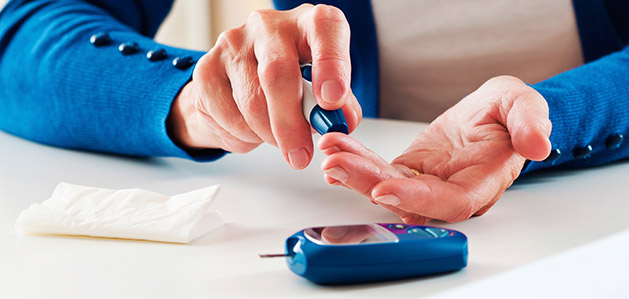
Diabetes refers to a group of diseases that affect how your body uses blood sugar (glucose). Glucose is vital to your health because it’s an important source of energy for the cells that make up your muscles and tissues. It’s also your brain’s main source of fuel.
The underlying cause of diabetes varies by type. But, no matter what type of diabetes you have, it can lead to excess sugar in your blood. Too much sugar in your blood can lead to serious health problems.
Chronic diabetes conditions include type 1 diabetes and type 2 diabetes.
Causes
Type 1 Diabetes: The exact cause of type 1 diabetes is unknown. What is known is that your immune system — which normally fights harmful bacteria or viruses — attacks and destroys your insulin-producing cells in the pancreas. This leaves you with little or no insulin. Instead of being transported into your cells, sugar builds up in your bloodstream.
Type 1 is thought to be caused by a combination of genetic susceptibility and environmental factors, though exactly what those factors are is still unclear. Weight is not believed to be a factor in type 1 diabetes.
Prediabetes and Type 2 Diabetes: In prediabetes — which can lead to type 2 diabetes — and in type 2 diabetes, your cells become resistant to the action of insulin, and your pancreas is unable to make enough insulin to overcome this resistance. Instead of moving into your cells where it’s needed for energy, sugar builds up in your bloodstream.
Exactly why this happens is uncertain, although it’s believed that genetic and environmental factors play a role in the development of type 2 diabetes too. Being overweight is strongly linked to the development of type 2 diabetes, but not everyone with type 2 is overweight.
Potentially reversible diabetes conditions include prediabetes and gestational diabetes. Prediabetes occurs when your blood sugar levels are higher than normal, but not high enough to be classified as diabetes. And prediabetes is often the precursor of diabetes unless appropriate measures are taken to prevent progression. Gestational diabetes occurs during pregnancy but may resolve after the baby is delivered (www.mayoclinic.org).
Gestational Diabetes: During pregnancy, the placenta produces hormones to sustain your pregnancy. These hormones make your cells more resistant to insulin.
Normally, your pancreas responds by producing enough extra insulin to overcome this resistance. But sometimes your pancreas can’t keep up. When this happens, too little glucose gets into your cells and too much stays in your blood, resulting in gestational diabetes.
Risk Factors
Risk factors for type 1 diabetes: Although the exact cause of type 1 diabetes is unknown, factors that may signal an increased risk include:
- Family history. Your risk increases if a parent or sibling has type 1 diabetes.
- Environmental factors. Circumstances such as exposure to a viral illness likely play some role in type 1 diabetes.
- The presence of damaging immune system cells (autoantibodies). Sometimes family members of people with type 1 diabetes are tested for the presence of diabetes autoantibodies. If you have these autoantibodies, you have an increased risk of developing type 1 diabetes. But not everyone who has these autoantibodies develops diabetes.
- Geography. Certain countries, such as Finland and Sweden, have higher rates of type 1 diabetes.
Risk factors for prediabetes and type 2 diabetes: Researchers don’t fully understand why some people develop prediabetes and type 2 diabetes and others don’t. It’s clear that certain factors increase the risk, however, including:
- Weight. The more fatty tissue you have, the more resistant your cells become to insulin.
- Inactivity. The less active you are, the greater your risk. Physical activity helps you control your weight, uses up glucose as energy, and makes your cells more sensitive to insulin.
- Family history. Your risk increases if a parent or sibling has type 2 diabetes.
- Race or ethnicity. Although it’s unclear why, certain people — including Black, Hispanic, American Indian, and Asian American people — are at higher risk.
- Age. Your risk increases as you get older. This may be because you tend to exercise less, lose muscle mass and gain weight as you age. But type 2 diabetes is also increasing among children, adolescents, and younger adults.
- Gestational diabetes. If you developed gestational diabetes when you were pregnant, your risk of developing prediabetes and type 2 diabetes increases. If you gave birth to a baby weighing more than 9 pounds (4 kilograms), you’re also at risk of type 2 diabetes.
- Polycystic ovary syndrome. For women, having polycystic ovary syndrome — a common condition characterized by irregular menstrual periods, excess hair growth, and obesity — increases the risk of diabetes.
- High blood pressure. Having blood pressure over 140/90 millimeters of mercury (mm Hg) is linked to an increased risk of type 2 diabetes.
- Abnormal cholesterol and triglyceride levels. If you have low levels of high-density lipoprotein (HDL), or “good,” cholesterol, your risk of type 2 diabetes is higher. Triglycerides are another type of fat carried in the blood. People with high levels of triglycerides have an increased risk of type 2 diabetes. Your doctor can let you know what your cholesterol and triglyceride levels are.
Risk factors for gestational diabetes: Pregnant women can develop gestational diabetes. Some women are at greater risk than are others. Risk factors for gestational diabetes include:
- Age. Women older than age 25 are at increased risk.
- Family or personal history. Your risk increases if you have prediabetes — a precursor to type 2 diabetes — or if a close family member, such as a parent or sibling, has type 2 diabetes. You’re also at greater risk if you had gestational diabetes during a previous pregnancy, if you delivered a very large baby or if you had an unexplained stillbirth.
- Weight. Being overweight before pregnancy increases your risk.
- Race or ethnicity. For reasons that aren’t clear, women who are Black, Hispanic, American Indian, or Asian American are more likely to develop gestational diabetes (www.mayoclinic.org).
Symptoms
If you have any of the following diabetes symptoms, see your doctor about getting your blood sugar tested:
- Urinate (pee) a lot, often at night
- Are very thirsty
- Lose weight without trying
- Are very hungry
- Have blurry vision
- Have numb or tingling hands or feet
- Feel very tired
- Have very dry skin
- Have sores that heal slowly
- Have more infections than usual
Symptoms of Type 1 Diabetes
People who have type 1 diabetes may also have nausea, vomiting, or stomach pains. Type 1 diabetes symptoms can develop in just a few weeks or months and can be severe. Type 1 diabetes usually starts when you’re a child, teen, or young adult but can happen at any age.
Symptoms of Type 2 Diabetes
Type 2 diabetes symptoms often develop over several years and can go on for a long time without being noticed (sometimes there aren’t any noticeable symptoms at all). Type 2 diabetes usually starts when you’re an adult, though more and more children, teens, and young adults are developing it. Because symptoms are hard to spot, it’s important to know the risk factors for type 2 diabetes and visit your doctor if you have any of them.
Symptoms of Gestational Diabetes
Gestational diabetes (diabetes during pregnancy) usually shows up in the middle of the pregnancy and typically doesn’t have any symptoms. If you’re pregnant, you should be tested for gestational diabetes between 24 and 28 weeks of pregnancy so you can make changes if needed to protect your health and your baby’s health.
Prevention
Get more physical activity: There are many benefits to regular physical activity. Exercise can help you:
- Lose weight
- Lower your blood sugar
- Boost your sensitivity to insulin — which helps keep your blood sugar within a normal range
Research shows that aerobic exercise and resistance training can help control diabetes. The greatest benefit comes from a fitness program that includes both.
Get plenty of fiber: Fiber may help you:
- Reduce your risk of diabetes by improving your blood sugar control
- Lower your risk of heart disease
- Promote weight loss by helping you feel full
Foods high in fiber include fruits, vegetables, beans, whole grains, and nuts.
Go for whole grains: It’s not clear why, but whole grains may reduce your risk of diabetes and help maintain blood sugar levels. Try to make at least half your grains whole grains.
Many foods made from whole grains come ready to eat, including various breads, pasta products, and cereals.
Lose extra weight: If you’re overweight, diabetes prevention may hinge on weight loss. Every pound you lose can improve your health, and you may be surprised by how much. Participants in one large study who lost a modest amount of weight — around 7 percent of initial body weight — and exercised regularly reduced the risk of developing diabetes by almost 60 percent.
Skip fad diets and just make healthier choices: Low-carb diets, the glycemic index diet, or other fad diets may help you lose weight at first. But their effectiveness at preventing diabetes and their long-term effects aren’t known. And by excluding or strictly limiting a particular food group, you may be giving up essential nutrients and often craving such foods. Instead, make variety and portion control part of your healthy-eating plan.
Treatment
Treatment for type 1 diabetes involves insulin injections or the use of an insulin pump, frequent blood sugar checks, and carbohydrate counting. Treatment of type 2 diabetes primarily involves lifestyle changes, monitoring of your blood sugar, along with diabetes medications, insulin, or both.
- Monitoring your blood sugar. Depending on your treatment plan, you may check and record your blood sugar as many as four times a day or more often if you’re taking insulin. Careful monitoring is the only way to make sure that your blood sugar level remains within your target range. People with type 2 diabetes who aren’t taking insulin generally check their blood sugar much less frequently.In addition to daily blood sugar monitoring, your doctor will likely recommend regular A1C testing to measure your average blood sugar level for the past two to three months.
- Insulin. People with type 1 diabetes need insulin therapy to survive. Many people with type 2 diabetes or gestational diabetes also need insulin therapy.Many types of insulin are available, including short-acting (regular insulin), rapid-acting insulin, long-acting insulin, and intermediate options. Depending on your needs, your doctor may prescribe a mixture of insulin types to use throughout the day and night.Insulin can’t be taken orally to lower blood sugar because stomach enzymes interfere with insulin’s action. Often insulin is injected using a fine needle and syringe or an insulin pen — a device that looks like a large ink pen.An insulin pump also may be an option. The pump is a device about the size of a small cellphone worn on the outside of your body. A tube connects the reservoir of insulin to a catheter that’s inserted under the skin of your abdomen.
- Oral or other medications. Sometimes other oral or injected medications are prescribed as well. Some diabetes medications stimulate your pancreas to produce and release more insulin. Others inhibit the production and release of glucose from your liver, which means you need less insulin to transport sugar into your cells.Still, others block the action of stomach or intestinal enzymes that break down carbohydrates or make your tissues more sensitive to insulin. Metformin (Glumetza, Fortamet, others) is generally the first medication prescribed for type 2 diabetes.Another class of medication called SGLT2 inhibitors may be used. They work by preventing the kidneys from reabsorbing sugar into the blood. Instead, the sugar is excreted in the urine.
- Transplantation. In some people who have type 1 diabetes, a pancreas transplant may be an option. Islet transplants are being studied as well. With a successful pancreas transplant, you would no longer need insulin therapy.But transplants aren’t always successful — and these procedures pose serious risks. You need a lifetime of immune-suppressing drugs to prevent organ rejection. These drugs can have serious side effects, which is why transplants are usually reserved for people whose diabetes can’t be controlled or those who also need a kidney transplant.
- Bariatric surgery. Although it is not specifically considered a treatment for type 2 diabetes, people with type 2 diabetes who are obese and have a body mass index higher than 35 may benefit from this type of surgery. People who’ve undergone gastric bypass have seen significant improvements in their blood sugar levels. However, this procedure’s long-term risks and benefits for type 2 diabetes aren’t yet known.
Treatment for gestational diabetes
Controlling your blood sugar level is essential to keeping your baby healthy and avoiding complications during delivery. In addition to maintaining a healthy diet and exercising, your treatment plan may include monitoring your blood sugar and, in some cases, using insulin or oral medications.
Your doctor also will monitor your blood sugar level during labor. If your blood sugar rises, your baby may release high levels of insulin — which can lead to low blood sugar right after birth.
Treatment for prediabetes
If you have prediabetes, healthy lifestyle choices can help you bring your blood sugar level back to normal or at least keep it from rising toward the levels seen in type 2 diabetes. Maintaining a healthy weight through exercise and healthy eating can help. Exercising at least 150 minutes a week and losing about 7% of your body weight may prevent or delay type 2 diabetes.
Sometimes medications — such as metformin (Glucophage, Glumetza, others) — also are an option if you’re at high risk of diabetes, including when your prediabetes is worsening or if you have cardiovascular disease, fatty liver disease, or polycystic ovary syndrome.
In other cases, medications to control cholesterol — statins, in particular — and high blood pressure medications are needed. Your doctor might prescribe low-dose aspirin therapy to help prevent cardiovascular disease if you’re at high risk. However, healthy lifestyle choices remain key.
Natural ways to manage type 1 diabetes
Quit Smoking: There may not be a cure for Type 1 diabetes, but there are a number of ways to effectively treat it and mitigate its effects. Smoking can increase the risk of heart attack and stroke in diabetic patients by almost 3 times, so if you do consume tobacco products, consider quitting to avoid that heightened risk. Diabetes affects many different parts of your body, and any additional stress or carcinogen deposition can complicate the disorder. (diabetesjournals.org)
Avocado: Early studies on avocado have shown that the nutrient-rich extract from avocado can measurably reduce blood sugar in the body, and this is believed to be due to the rejuvenation of islet cells in the pancreas that produce insulin. While this is still undergoing testing, it does show promising results for a reversal or serious moderation of the symptoms of Type 1 diabetes (academic.oup.com).
Dietary Restrictions: Aside from a rather long list of food and herbs that you should add to your diet, there is also quite a bit you should eliminate. This includes the close limiting of carbohydrates, particularly simple sugars. When these basic sugars are broken down into the body, they cause a rapid spike in blood sugar that your body cannot naturally handle. By keeping your carbohydrate intake under control, you are better able to manage the fluctuating blood sugar and the consequent symptoms.
Red Clover: The biggest problem with Type 1 diabetes is the inability to cure the disease since it is typically caused by the destruction of the key beta cells in the pancreas that can produce insulin. However, red clover, a relatively unknown herb, has a compound called genistein that can stimulate the regrowth and protection of pancreatic beta cells, allowing your body to produce some of the insulin it needs
Lifestyle Changes: Exercising more and living less of a sedentary lifestyle is important if you want to moderate the symptoms of Type 1 diabetes. Obesity, cardiovascular issues, and high blood pressure are all associated with diabetes, but if you can stimulate your metabolism and keep your body running at a higher level, you are far more likely to enjoy a longer, more active life with diabetes.
Natural ways to manage type 2 diabetes
Fiber and Barley: Eating fiber decreases blood sugar and insulin concentrations. The recommended amount of fiber is around 30 grams per day. Most Americans get around 6-8 grams, which is not nearly enough. While you can take fiber supplements like Metamucil (psyllium husk), the best way to reach your goal is to eat your veggies. Barley is a high-fiber, high-protein grain which has lots of data to support its role in helping improve blood sugar, insulin, cholesterol, and general inflammation (www.sciencedirect.com).
Zinc: Those with diabetes are commonly found to be zinc deficient. Studies have shown zinc supplementation can reduce blood sugar and A1C, have an antioxidant effect, lower blood sugar, and even help treat some of the complications related to diabetes. Zen’s Rooibos tea is a great option that contains high levels of minerals, including zinc.
Cinnamon: Cinnamon is a medically beneficial indulgence to help lower your blood sugar and cholesterol levels.
Fenugreek: a seed commonly used as a food spice that has been used abroad for centuries for its medical benefits to lower cholesterol and hba1c. Fenugreek has potential health benefits like management of blood glucose in type 2 diabetics, cholesterol-lowering effect, the effect on growth hormone leading to modulation of metabolic syndrome, anti-inflammatory, and anticancer effects (www.sciencedirect.com).
Berberine: found in plants such as goldenseal, barberry, Oregon grape root and Coptis. Current evidence supports its use for decreasing blood sugar and hba1c. Be aware that this herb can interfere with the metabolism of traditional pharmaceuticals and should never be taken while pregnant.
Supportive Links:
“Diabetes treatment—bridging the divide.” The New England journal of medicine 356.15 (2007): 1499.
https://www.ncbi.nlm.nih.gov/pmc/articles/PMC4152979/
“A review of diabetes treatment adherence and the association with clinical and economic outcomes.” Clinical therapeutics 33.1 (2011): 74-109.
https://www.sciencedirect.com/science/article/abs/pii/S014929181100066X
“Approaches to the treatement of diabetes mellitus: an overview.” Cellular and molecular biology (Noisy-le-Grand, France) 49.4 (2003): 635.
Note: “Western Pharmaceutical” is defined as a system in which medical doctors and other healthcare professionals (such as nurses, pharmacists, and therapists) treat symptoms and diseases using drugs, radiation, or surgery. Quote from National Cancer Institute: http://www.cancer.gov




0 Comments