

Mucormycosis (previously called zygomycosis) is a serious but rare fungal infection caused by a group of molds called mucormycetes. These molds live throughout the environment. Mucormycosis mainly affects people who have health problems or take medicines that lower the body’s ability to fight germs and sickness. It most commonly affects the sinuses or the lungs after inhaling fungal spores from the air, or the skin after the fungus enters the skin through a cut, burn, or another type of skin injury. However, it can occur in nearly any part of the body.
How is mucormycosis treated?
Mucormycosis is a serious infection and needs to be treated with prescription antifungal medicine, usually amphotericin B, posaconazole, or isavuconazole. These medicines are given through a vein (amphotericin B, posaconazole, isavuconazole) or by mouth (posaconazole, isavuconazole). Other medicines, including fluconazole, voriconazole, and echinocandins, do not work against fungi that cause mucormycosis. Often, mucormycosis requires surgery to cut away the infected tissue.
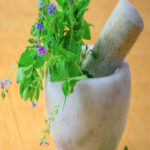
A common anti-fungal herb that can be used is Holy Basil. Holy basil, or Tulsi, is a super herb plant that has been used for centuries by herbalists and Ayurvedic medicine as an “adaptogen” This super herb allows the body to adapt against stress and promotes good general health.
Supportive Links:
“Mucormycosis and entomophthoramycosis: a review of the clinical manifestations, diagnosis and treatment.” Clinical Microbiology and Infection10 (2004): 31-47.
https://onlinelibrary.wiley.com/doi/full/10.1111/j.1470-9465.2004.00843.x
“Rhinocerebral mucormycosis: evolution of the disease and treatment options.” The Laryngoscope 107.7 (1997): 855-862.
https://onlinelibrary.wiley.com/doi/abs/10.1097/00005537-199707000-00004
“Challenges in the diagnosis and treatment of mucormycosis.” Medical mycology 56.suppl_1 (2018): S93-S101.
Note: “Western Pharmaceutical” is defined as a system in which medical doctors and other healthcare professionals (such as nurses, pharmacists, and therapists) treat symptoms and diseases using drugs, radiation, or surgery. Quote from National Cancer Institute: http://www.cancer.gov




0 Comments